Why Human-To-Human Connection Is the True Differentiator In the AI era
Two emerging HR-led trends are reshaping AI adoption: AI Councils, cross-functional groups that ensure ethical, transparent implementation, and AI Champions, employee advocates driving trust and collaboration across teams.
December 1, 2025 - 2:00 PM

AI is now embedded in nearly every facet of work, and trust has become the critical differentiator between organizations that thrive and those that falter. The Adecco Group’s 2025 Global Workforce of the Future (GWoF) report reveals a striking gap: future-ready workers (those with adaptability, tech savvy, and proactivity) score 6.6 out of 10 in AI trust, while mainstream workers score just 3.3.
|
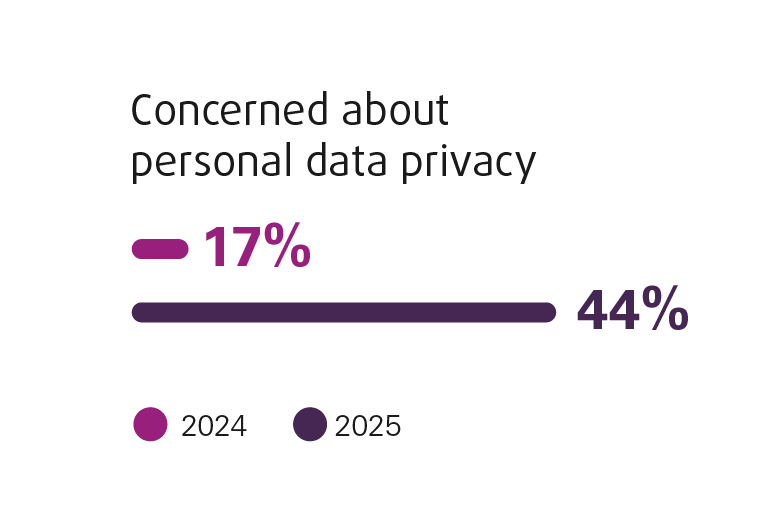
While the report shows growing employee optimism about AI, concerns over the misuse of personal information have increased over the past year.
|
Global Workforce of the Future 2025 report, page 27 |
This trust gap isn’t just about technology, it’s about people. Michelle Brooks, Chief People and Culture Officer at Security Compass, frames AI adoption as “the biggest change management project at any company right now.” Her AI Adoption Council brings together IT, governance, and people teams to ensure AI is implemented ethically and empathetically. “We want people to use AI, but we also want to move them along that journey in a healthy way,” she shared on the Talk Talent to Me podcast.
One solution Brooks introduced at Security Compass is bottom-up enablement through an AI Champions group of volunteers from each department who share ideas and foster diversity of thought from every perspective. GWoF data reinforces this approach. Employees involved in redesigning their roles are significantly more likely to trust their employer’s use of AI, yet only 30% globally say they’ve had that opportunity. Interestingly Australia (41%) is one of two countries where employee involvement in AI work redesign is the highest – behind only Canada at 50%.
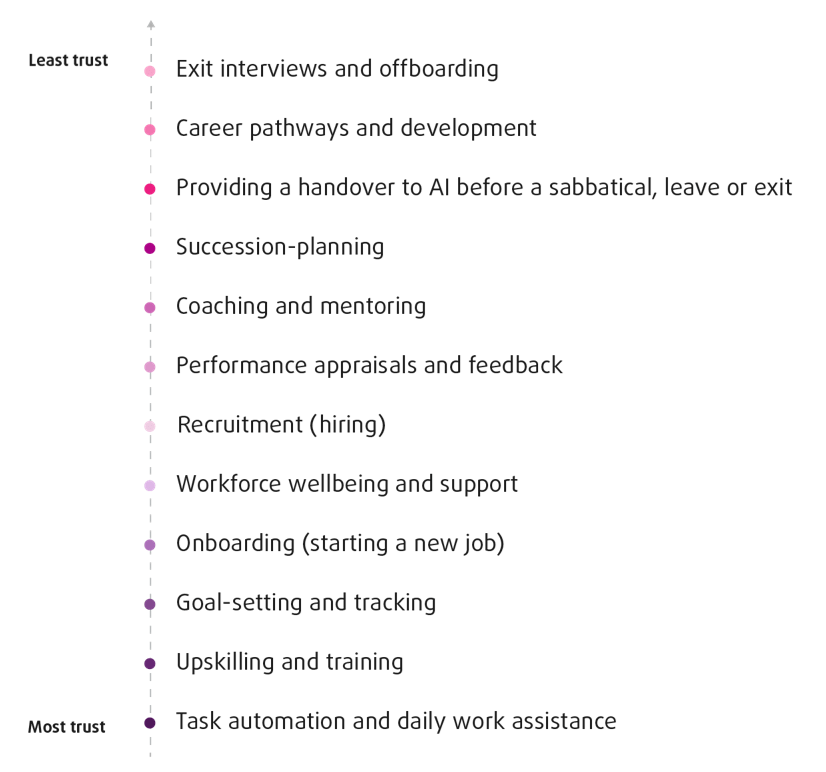
According to the report 94% of Australian workers are willing to be flexible and adaptable to adjust to the rise of AI in the workplace – significantly higher than the global average (87%). While employees value AI for speed, neutrality, and 24/7 availability, they rely on human connection for context, empathy, and trust, especially in career-defining moments. The report shows workers trust AI for task automation and training, but prefer humans for coaching, mentoring, and career development. As Brooks notes, “Only when HR and IT work together can we drive change in a safe and positive way.”
Source: Global Workforce of the Future 2025 report, page 26
In an era where AI is a core competency, trust isn’t built by algorithms alone, it’s earned through transparency, collaboration, and empathy. The future of work may be powered by AI, but in the moments that matter most—career conversations, leadership guidance, and personal growth—human trust is irreplaceable.
The future of work demands a human-centered approach. Explore more insights from the 2025 Global Workforce of the Future Report.

The Adecco Group’s Global Workforce of the Future research investigates the changing world of work from the employee perspective. This edition focuses on understanding current perceptions of AI and examines worker expectations for the redesign of jobs.