Why Empowerment Is the Key to Sustainable Change

Empowerment has quietly become the most critical infrastructure of modern work. In an era of continuous change, it determines how effectively systems, processes, and technology translate into real performance. Empowerment is frequently discussed, but our latest research shows it is less consistently experienced by employees.
- 32% strongly feel in control of their career development
- 27% feel strongly their ideas are genuinely valued
- 29% feel strongly they influence decisions affecting their work and their team
Source: LHH 2026 Workforce Agility Study
Leaders acknowledge they could be doing more to move empowerment from intent into practice.
- 36% of organisations involve employees in decisions directly affecting their work
- 43% of leaders strongly believe they empower employees to manage their career development
Empowerment is often treated as a cultural nice-to-have,” says James McIlvena at LHH. “But the data suggests it is central to how people experience continuous change. Only a minority of employees feel in control of their career paths, believe their ideas are valued, or feel able to influence decisions that affect their work. While autonomy is often encouraged, empowerment ultimately depends on how work is structured and how decisions are made in practice.
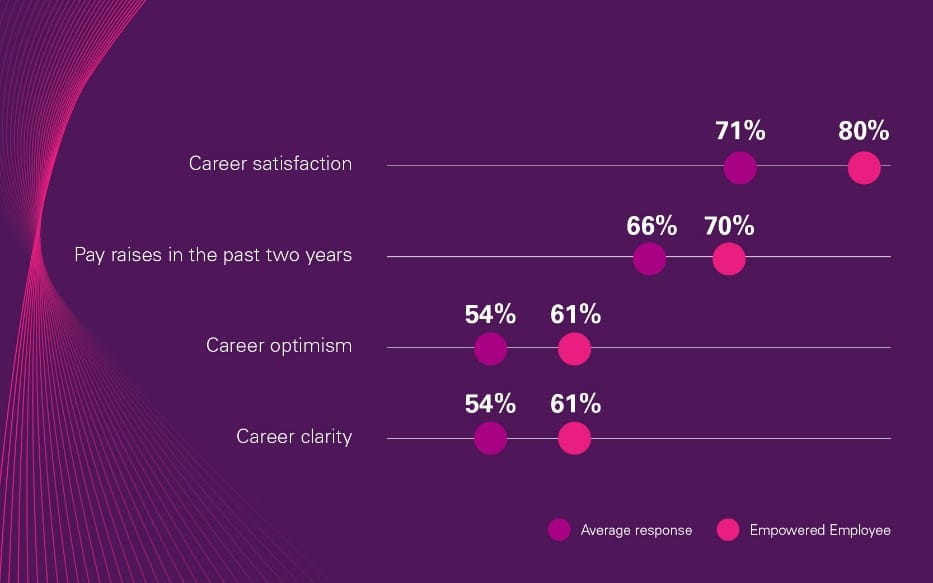
When employees feel empowered, the impact is clear.
Employees who reported higher levels of career control, influence and voice, show, on average, nearly seven percentage points higher satisfaction, stronger optimism about the future, better pay outcomes, and greater confidence navigating change. Even traditionally difficult transitions such as reskilling, role changes, and career pivots become opportunities for growth when they are experienced as choices rather than obligations.
Source: LHH 2026 Workforce Agility Study
The data makes one thing clear: empowerment rises or falls based on how change is executed. When change is reactive, rushed, or stacked endlessly, employees lose clarity, confidence, and voice.
Three architectural shifts to embed empowerment into everyday culture
First: Stage change instead of stacking it.
Today, change accumulates. New technologies arrive before old expectations disappear. New roles emerge while metrics remain anchored to the past.
High‑performing organisations will begin sequencing change more intentionally, creating clearer phases where experimentation is expected, followed by periods of consolidation and stability. Empowerment is reinforced when people have space to learn, apply, and stabilise. Adaptation needs rhythm, not constant acceleration.
Second: Help employees navigate their careers with clarity.
Career clarity is one of the strongest, most practical signals of empowerment. Organisations must build mobility and adjacent skills mapping as an organisational discipline. Reinvention should feel like intentional progression, not guesswork.
Organisations don’t need rigid “one size fits all” pathways, but they do need visible internal progression path, transparent skill adjacencies, and honest conversations about what reinvention leads to next.
Third: Build the conditions for sustained performance.
In most organisations, rest and work-life balance are framed as a benefit. In high‑change environments, it should be treated as infrastructure.
Periods of intense transition, including learning new skills, moving roles, adjusting to new ways of working, must be paired with deliberate stabilisation. Without this, empowerment erodes, and performance risks burnout.
Build a strategy that supports your workforce across the change lifecycle
In an age of relentless transition, empowerment is no longer about engagement scores. It’s about whether people believe they have a future inside the system that’s changing around them.