The Benefits of Career Reinvention and the Burnout Behind It
August 17, 2026

Not long ago, career reinvention was a defining moment. A deliberate pivot you made when you wanted to make a life change, your role no longer fit, or your industry was shifting beneath you. Today, it’s something else entirely.
For many workers, reinvention is no longer a choice, it’s a condition of staying employed.
Across industries and experience levels, people are reshaping their careers more frequently than ever before: learning new skills, moving into adjacent roles, adapting to new technologies, and recalibrating their expectations of work. On paper, the outcomes are encouraging. According to LHH’s 2026 Workforce Agility Study, almost 78% of career reinventors and pivoters saw promotions or pay increases, compared with 72% of workers overall.
Reinvention feels empowering when you’re in control and draining when you have no say in it
While reinvention itself is associated with strong outcomes, the experience of reinventing varies widely. Employees who feel a sense of control over their careers and have a voice in decisions tend to feel:
- More confident in their ability to adapt
- More optimistic about their future careers
- More satisfied with their progress
For many job seekers today, reinvention begins in uncertainty:
- A role disappears before the next step is defined
- Skills expectations shift without clear direction
- Opportunities feel more competitive and less transparent
Empowered employees report more positive outcomes
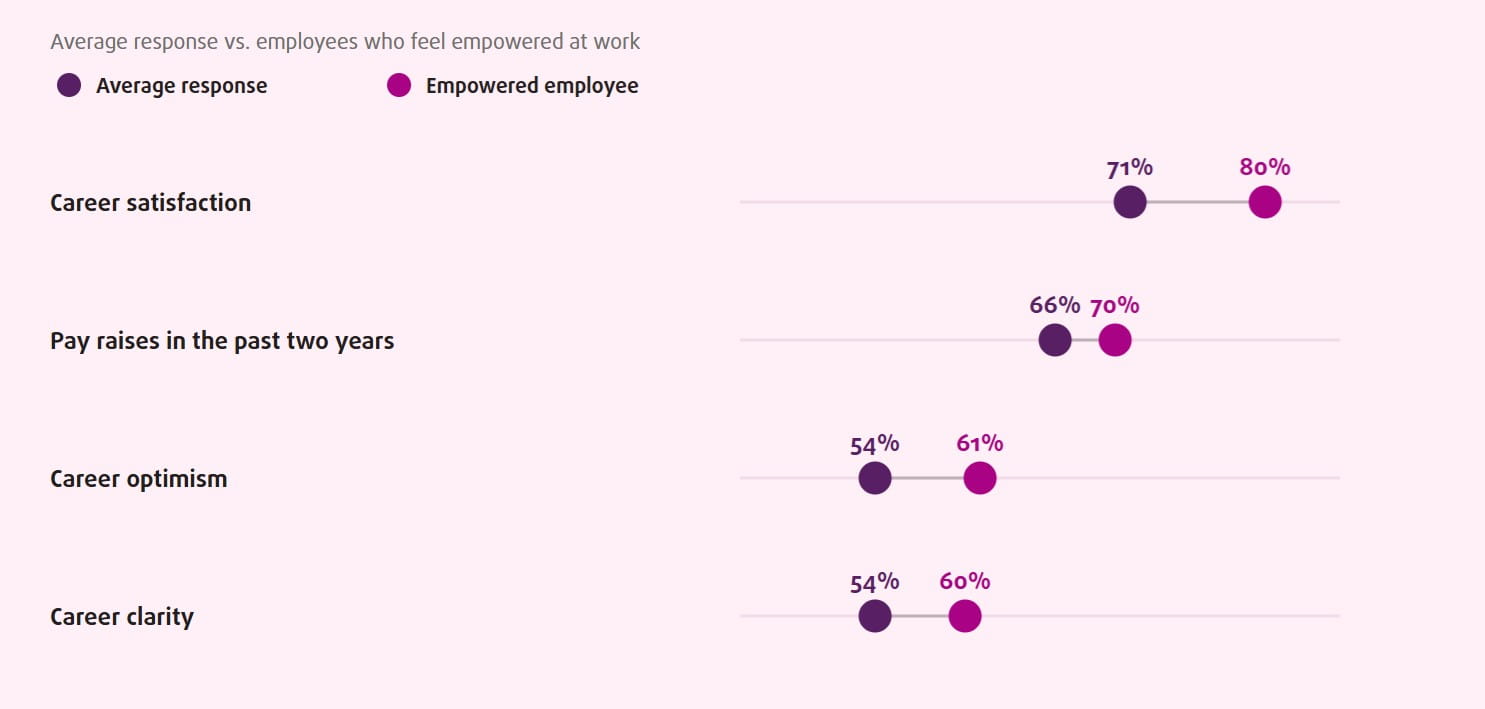
Source: LHH 2026 Workforce Agility Study
In this context, reinvention can feel less like growth and more like recovery.
“The most important distinction we see is whether people feel they’re moving toward something or recovering from something,” said John Morgan, President, Career Transition & Mobility at LHH. “That difference shapes not just outcomes, but confidence. When people have clarity on where they’re going and feel prepared, they’re far more likely to step into new roles with momentum rather than hesitation.”Career reinvention has become a constant state of recalibration
From the outside, reinvention is often framed as a positive (e.g., proof of adaptability, resilience, and ambition).
From the inside, the pressure to change can feel like a constant cycle: Many workers describe a continuous need to:
- Stay ahead of emerging skills
- Reposition themselves for new opportunities
- Justify their relevance in a changing market
This creates a subtle but persistent cognitive load. Even during periods of stability, there is an underlying question: How long will this last?
That tension is contributing to what many are experiencing as the new form of burnout, not tied to workload, but to ongoing instability.
Sustainable reinvention is about moving with direction, not just effort
But for many workers, the issue is not volume of effort (e.g., more learning, more networking, more side projects), it’s lack of clarity.
Career reinvention is manageable when you’re prepared to undertake it:
- You have identified potential career paths, aligned with actual market opportunities
- You’ve experienced periods of learning and transition
- You have periods of skill application and consistency
Without that rhythm, change fatigue can feel relentless. Skills are acquired faster than they can be applied. Progress feels temporary. Confidence never fully develops.
For job seekers especially, this lack of direction shows up when navigating the current job market: applying broadly, trying to understand unclear skill requirements, and struggling to connect the volume of effort with a positive outcome.
The hiring experience is intensifying the pressure to reinvent
Career transitions today rarely happen in isolation and are often shaped by the hiring process itself.
Factors contributing to increasingly difficult job search
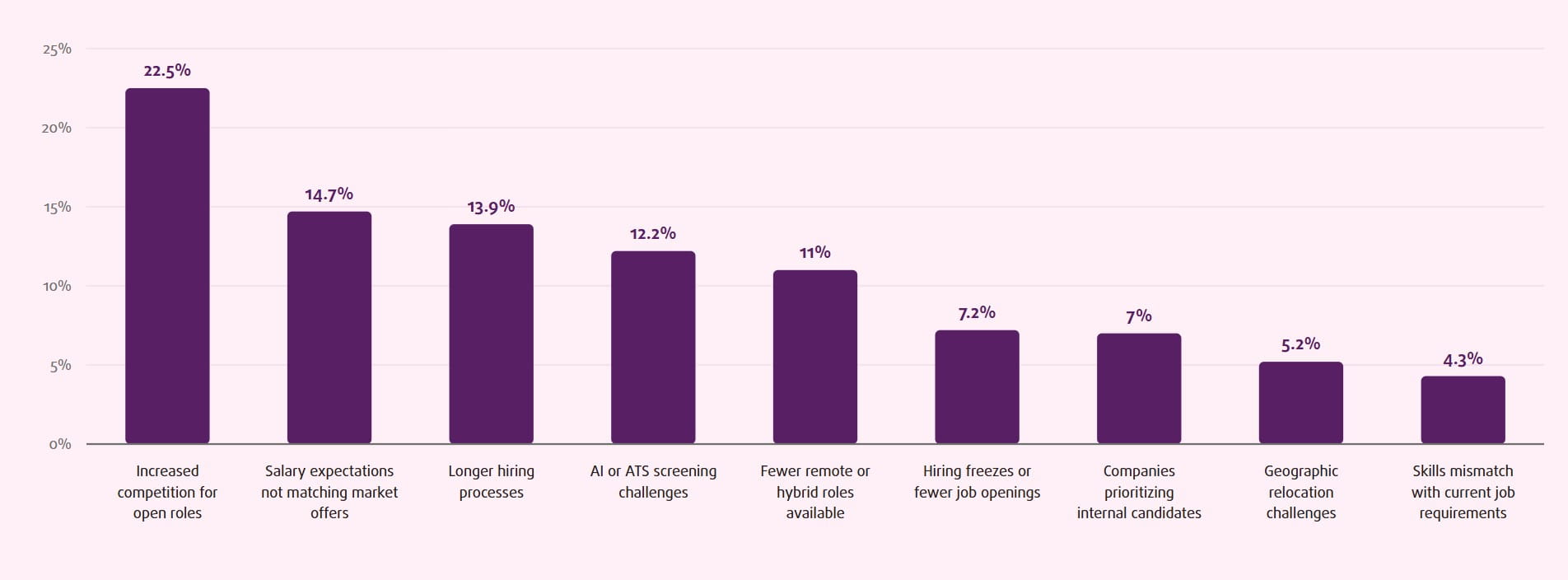
Source: LHH April 2026 Career Transition Coach Survey
According to recent data from LHH Career Transition Coaches, candidates find the job search to be increasingly difficult over the past six months, as they learn to navigate:
- High volumes of competition per role
- Misalignment in salary expectations
- Length, multi-stage hiring processes with shifting criteria and limited visibility into decisions
- Growing use of automated screening tools
LHH Career Transition Coaches report that candidates are taking longer to land, feeling less confident, and asking for more support. There is a rise in requesting and attending coaching. Candidates are recognizing they need help navigating a tougher process, not just applying harder. Identifying quantifiable experience, capability, and transferable skills and how to clearly communicate that value is the foundation for a successful transition.
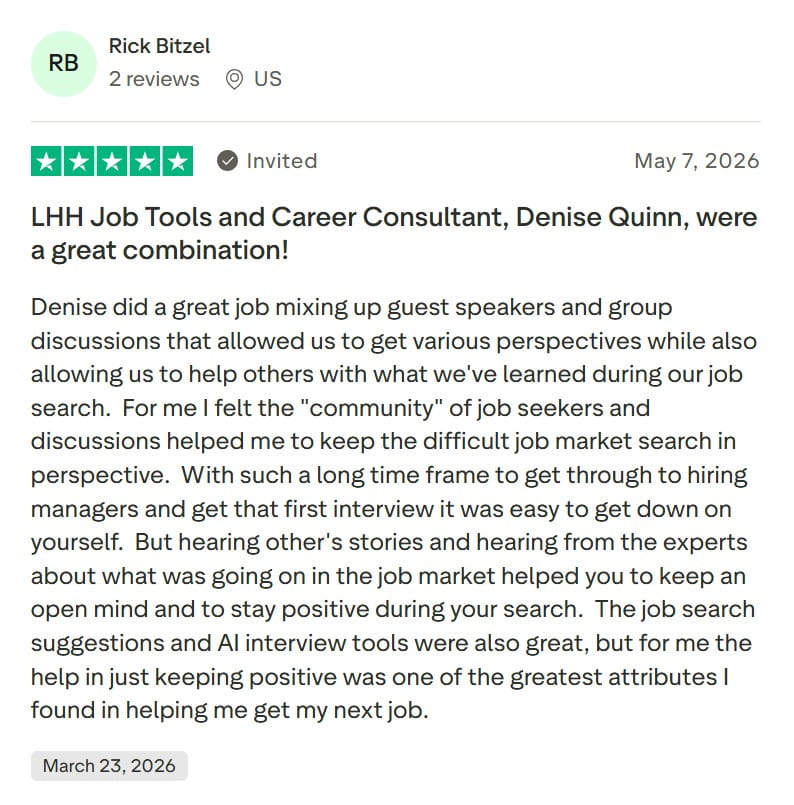
| Career reinvention can feel complex and uncertain, but the right support can turn it into an opportunity for growth, as it did for this user who shared their experience. “For me I felt the community of job seekers and discussions helped me to keep the difficult job market search in perspective. With such a long timeframe to get through to hiring managers and get that first interview, it was easy to get down on yourself,” Rick Bitzel shared on Trustpilot review of his LHH Career Transition support. “But hearing other's stories and hearing from the experts about what was going on in the job market helped you to keep an open mind and to stay positive during your search. The job search suggestions and AI interview tools were also great,” Bitzel added. |
|
LHH Career Transition programs are designed to make this journey clearer, more accessible, and personalized. We have developed tools to help career pivoters discover new career paths aligned with their strengths, build compelling CVs and online profiles, and demonstrate their value confidently at interviews. But beyond the technology, what truly makes the difference is guidance. Career coaching is instrumental to better understand skills, interpret market trends, and define a clear direction.
If you recently experienced restructuring or redundancy, you may be eligible for career transition support. Check your eligibility for LHH’s Career Transition services.