The New Employability Crisis
March 7, 2026

For years, layoff anxiety has been tied to macroeconomic uncertainty—markets tightening, business cycles shifting, and industries consolidating. In 2026, a new kind of fear has taken hold across the global workforce: the fear of becoming irrelevant.
Employees are no longer worried only about losing their jobs. They’re worried they won’t be competitive enough to land the next one.
Employability anxiety has overtaken job security as the defining psychological trend of the modern workforce. And it’s reshaping expectations for career development, mobility, and skills investment at an unprecedented speed.
A Workforce on Edge: Confidence in Skills Is Eroding
The latest global data in LHH’s 2026 Career Mobility & Outplacement Report reveals a sweeping shift in how employees perceive their futures.

Data source: 2026 Mobility & Outplacement Report
This is no longer about job loss itself, it's about a widening skills confidence gap, losing relevance, and struggling to keep pace with change.
Why this shift is happening now
1. Continuous restructuring has become the norm
Restructuring is no longer an occasional strategy; it is a constant operating state.

This frequency has created a workforce that fears layoffs as a probability, but reemployment as an uncertainty.
2. Skills are evolving faster than companies can keep up
AI acceleration is reshaping value creation and job design. Yet only a fraction of organizations tracks the metrics needed to build future‑ready skills pathways.
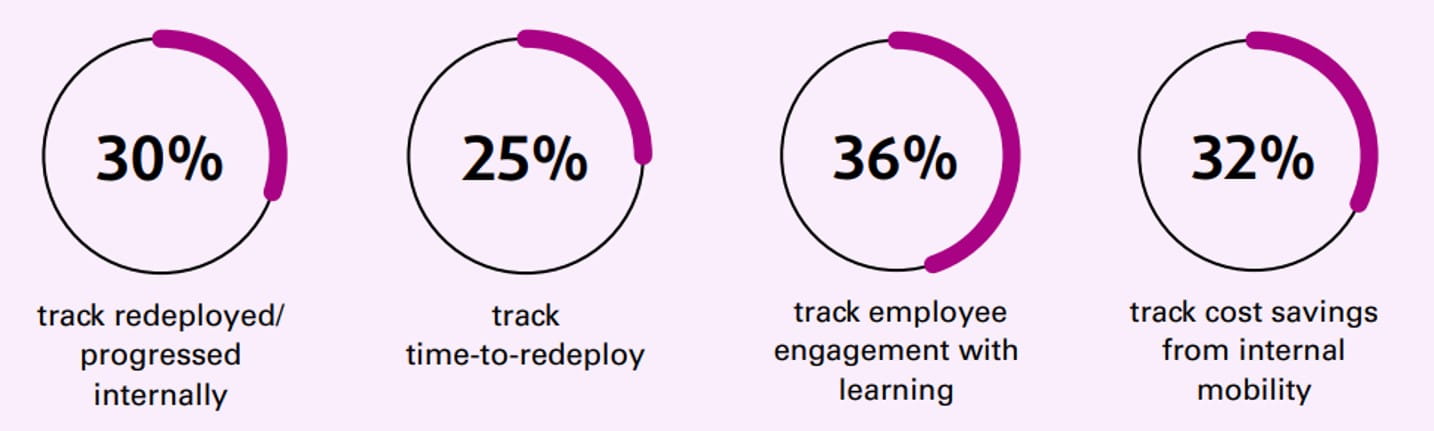
Employees know skill requirements are changing daily, yet they don’t see clear roadmaps to evolve with them. Meanwhile, the infrastructure to move talent internally remains under‑resourced, under‑measured, and largely invisible to employees.
3. Employers lack visible career paths
A striking perception gap fuels anxiety. This disconnect leaves employees feeling unsupported and unsure whether their organizations are truly invested in their growth.

4. AI has become a new source of job pressure
Across industries, AI is no longer viewed solely as an enabler, it’s a potential competitor.
- Over 50% of employees worry that AI could replace them, especially in tech, finance, media, and roles involving automation.
But the deeper issue is not AI itself, it’s not knowing which skills will matter next.
65% of employees say they would like to develop new skills, but don’t know which skillsets to pursue to remain competitive, indicating an unprecedented appetite for guidance.
The skills confidence gap: The real crisis hidden beneath layoffs
The real story isn’t just layoffs, it’s a broken sense of employability. Employees fear they may not meet the demands of future roles, and organizations struggle to provide clarity.
- Only 25% of employees say their employer supports reskilling/upskilling well
- Over 60% of employees say internal mobility and skill-building programs feel ineffective or unclear
Employees want to grow, but the path isn’t visible. This is the heart of the new employability crisis. This unmet need is where organizations are losing retention, culture, and competitive edge.
Combatting the employability crisis
The employability crisis is not an employee problem, it’s a system problem that requires a system level solution. Those who embrace mobility, reskilling, and transparent skills systems will not only weather the current volatility, they’ll become the employers people trust, stay with, and grow alongside.
View LHH’s 2026 Mobility & Outplacement Report
Real workforce insights fuel an end-to-end strategy execution
When leaders need more than just advice and insights to find a tailormade solution, LHH can help. We connect talent decisions, cut through complexity with practical guidance, and move forward in ways that work for your people.